Pressure is not the enemy — rigidity is
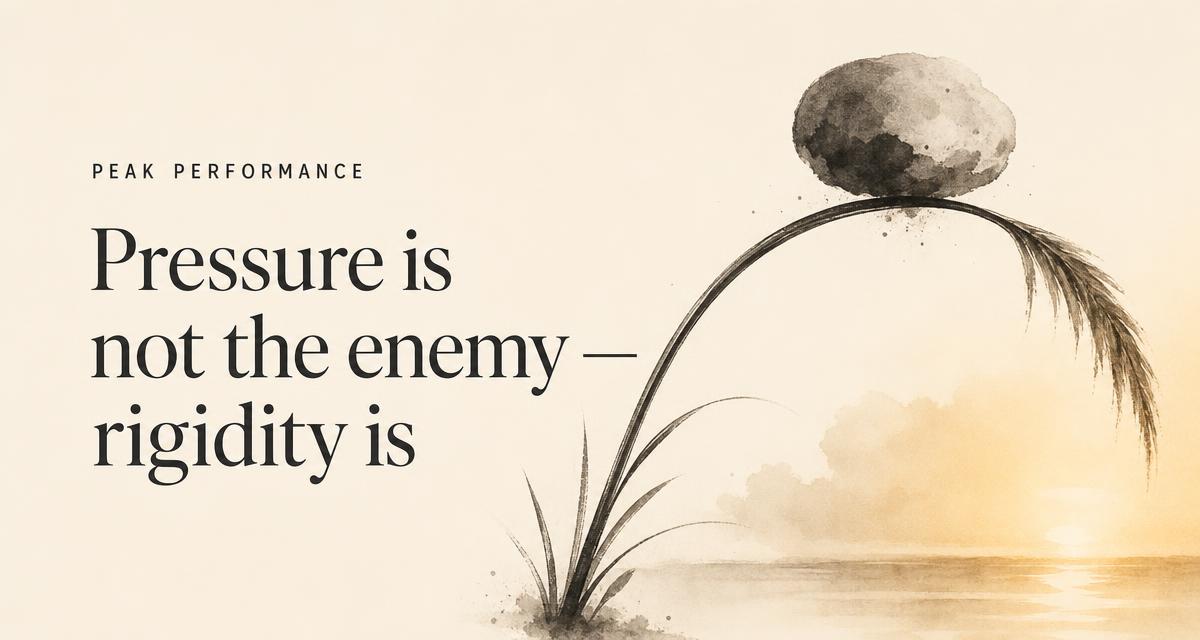
The people who hold up best under demand aren't the ones who found a way to avoid pressure. They're the ones who stay flexible inside it.
Pressure, on its own, is a neutral input. It sharpens attention, mobilizes energy, and makes effort feel meaningful. Athletes seek it out. Surgeons work inside it. Leaders build careers on their ability to think clearly while it's present.
What breaks people isn't the load. It's having only one way to carry it.
What rigidity looks like in practice
- One acceptable standard, applied to every task equally.
- One response to setbacks: work harder, longer, alone.
- One identity — the capable one — that can't be set down.
- One pace, regardless of what the week actually requires.
- No plan for what happens when the usual approach stops working.
Rigidity feels like discipline from the inside. That's what makes it hard to catch. It's often the exact trait that produced the earlier success, kept past its usefulness.
Flexibility is trainable
Psychological flexibility isn't looseness or lowered standards. It's the capacity to notice what a situation is actually asking for and adjust — to shift between intensity and recovery, between leading and listening, between pushing and letting something be good enough.
In practice it starts small: naming the emotion before acting on it, matching effort to stakes instead of treating everything as maximum stakes, and building a second and third response to stress so the first one isn't the only one.
Where are you applying strength when the situation is asking for adaptability?
Want to work on this directly? Book a free discovery session.